
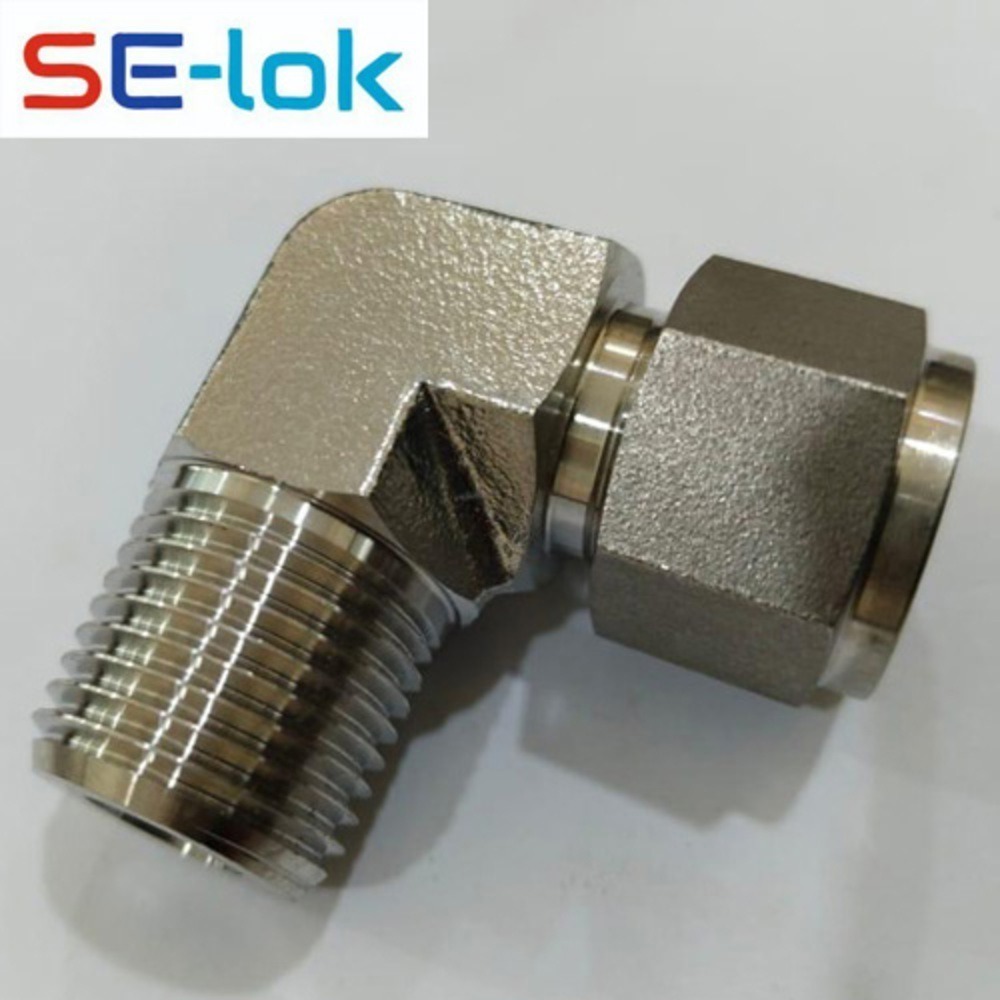
Procurement of instrumentation fittings should begin with technical compatibility, not merely a product description or quoted unit price. Companies searching for a SE-LOK Tube Fitting Manufacturer in Pune can improve purchasing decisions by using a structured qualification process before placing bulk or project-specific orders.
Start with material requirements. The selected fitting material should be appropriate for the process fluid, external environment, operating temperature, and broader system specification. Stainless steel grades are frequently considered for industrial instrumentation, but the exact requirement should be clearly documented.
Next, verify dimensional compatibility. Tube OD, wall thickness, fitting configuration, and end connections should correspond with the tubing and equipment being used.
Pressure and temperature information should never be left vague. Procurement teams should obtain operating conditions from engineering personnel rather than relying only on generic descriptions such as "high pressure."
For a Tube Fitting Manufacturer, useful enquiry information includes:
Required fitting type
Material grade
Tube outside diameter
Tube wall thickness
Thread specification
Operating pressure
Design pressure where applicable
Temperature range
Process medium
Quantity and delivery schedule
Documentation can also matter for project procurement. Depending on the industry and customer requirements, buyers may need relevant material, inspection, identification, or technical information.
Mangalsai Technologies Pvt Ltd serves industrial and instrumentation requirements from Pune, giving procurement teams a source to discuss product specifications across fittings and related components.
Local sourcing can be particularly useful for Maharashtra-based OEMs, EPC contractors, maintenance departments, laboratories, and process plants when projects require technical coordination or repeat procurement. However, geographic proximity should complement rather than replace technical evaluation.
Price comparison should also use equivalent specifications. A quotation for a different material grade, pressure capability, fitting design, or connection standard cannot be meaningfully compared solely on unit cost.
Procurement teams can reduce delays by creating a standard enquiry sheet for recurring instrumentation purchases. Engineering specifications can then be communicated consistently across RFQs.
The strongest supplier evaluation process combines technical suitability, product consistency, documentation requirements, delivery capability, and application understanding. This gives Pune-based buyers a much clearer basis for choosing instrumentation fittings for both projects and ongoing plant requirements.